Okay, so check this out—I’ve been wrestling with exchange UX for years, and OKX keeps showing up in conversations. Whoa! It’s polished, but there are little moments that bug me; tiny frictions that matter when you’re about to execute a trade. My instinct said “this’ll be straightforward,” but then I spent a morning hopping between browser sessions and the mobile app to see how login, futures access, and wallet flows actually behave. Seriously? Some things are smoother than you’d expect. Some things are not.
First impressions: the sign-in screen is clean. Short. To the point. But once you start the two-factor dance, you realize there’s choreography involved—SMS, authenticator apps, hardware keys—pick your poison. Initially I thought multi-factor would be uniform across platforms, but then I remembered that web and mobile sometimes disagree about session timeouts and challenge prompts. On one hand, that extra security is great; on the other, if you’re mid-futures margin call, delays feel terrible. Hmm… my gut felt that a single second of hesitation can cost a lot.
Here’s the practical path I use, step-by-step, when I need to log in fast: open a fresh browser profile (less cache weirdness), go to the official OKX login page, and if I’m on a desktop I prefer hardware 2FA—YubiKey or similar—because it’s near-instant. If I’m mobile, I use an authenticator app. Caveat: sometimes SMS still slips through when you’re overseas, so have a backup. Also, pro tip—save your recovery codes somewhere safe (not the Downloads folder, please). I’ll be honest: I once lost access because I treated recovery codes like junk mail. Never again.
Logging in: common snags and how to dodge them
One weird thing—session persistence behaves differently in incognito. Really. If you open an incognito window and log in, OKX may ask for reauth faster than in a normal profile. So don’t use incognito for long trading sessions unless you want repeated prompts. Also: browser extensions sometimes inject delays or block elements, so disable ad-blockers if the sign-in button looks broken. Something felt off about my first few attempts; it was a stray extension. Takeaway: simplify the environment before a big trade.
Also know this: KYC status matters. If your account is approved for spot but not for futures, you’ll get blocked at the entry point—sometimes with a terse message. Initially I thought account tiers were obvious, but actually the UI can be vague about permissions. On the OKX help pages you can usually find the step-by-step, but for a quick sanity check I often use the platform’s account center to confirm product access. Little things like that save time when markets move fast.
Futures on OKX: accessibility, risk, and setup
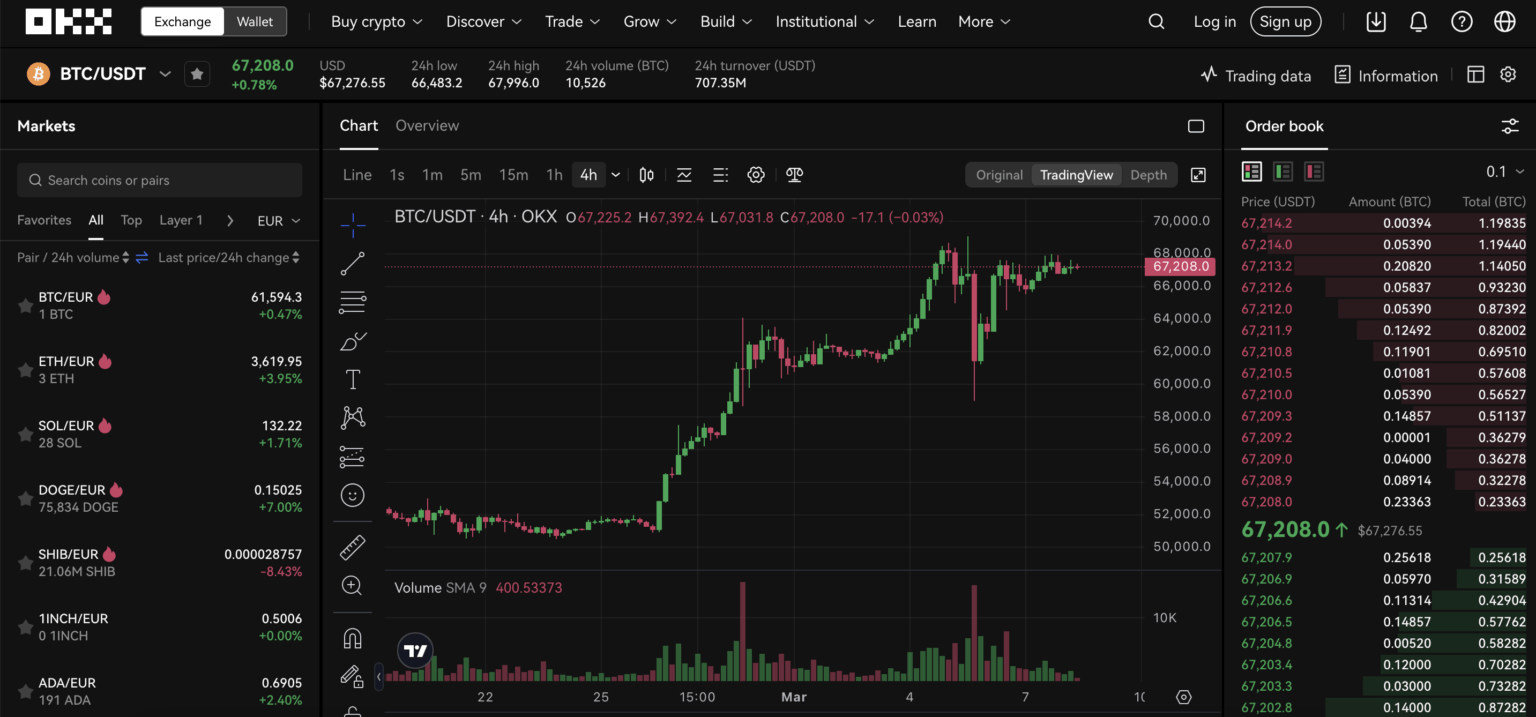
OKX futures are robust. Deep liquidity on many contracts. But there’s a learning curve, which is obvious but worth repeating: cross margin vs isolated, leverage toggles, and auto-deleverage mechanics. Whoa! Those acronyms matter. If you’re new to perpetuals, start small. Seriously.
Here’s how I approach futures setup: fund a futures wallet (separate from spot), set a conservative leverage, then open a tiny position to make sure liquidation math is behaving as expected. Initially I thought leverage was intuitive, but then realized platform rounding and maintenance margin can shift exit levels a bit—especially when fees and funding payments accrue. Okay, so check this out—run the numbers in a spreadsheet beforehand if you plan big size. I do that. Not glamorous, but it keeps me sleeping.
And a cautionary aside: rapid sequence trades and repeated logins from different IPs can trigger security flags. If you hop between VPNs or data centers, you might get locked out temporarily. That happened to me once during a weekend that got weirdly volatile—very very frustrating. If you travel, notify support ahead of time or set travel alerts where possible.
OKX Wallet: custodial vs non-custodial considerations
The OKX ecosystem supports both on-exchange balances and an integrated wallet that can interact with DeFi. My instinct liked the convenience. Then I paused—custody is convenience; wallet control is freedom. On balance, for active spot and futures trading I use exchange custody for speed. For long-term holdings I move to a private wallet. Something felt off the first time I left funds on an exchange during a major market drop—lesson learned.
Connecting an external wallet: the UX is pretty standard—connect, approve, done. But approvals can be phishy; always verify contract addresses and request details on the transaction popup. I’m biased toward hardware wallets for sizable holdings. If you’re using the integrated OKX wallet for DeFi interactions, check gas fee previews and contract approvals—one careless click and you authorize a lot. Hmm… sounds dramatic, but it happens.
FAQ
How do I sign in to OKX safely?
Use the official login page, enable two-factor authentication (prefer hardware or authenticator app), store recovery codes offline, and disable suspicious browser extensions. If you travel, update account settings or notify support to avoid lockouts. If you need a direct spot to start, try the official okx login flow—just make sure the URL is accurate before entering credentials.
Can I access futures immediately after registering?
Not always. Futures access may require additional KYC or explicit product enablement. Check your account center for permissions; fund your futures wallet separately from spot. Start with low leverage until you confirm your margin and liquidation behavior.
Is it safe to keep long-term crypto on OKX?
Exchanges are convenient and often secure, but they are custodial. For long-term holdings consider transferring to a private wallet (hardware recommended). Use exchange custody only if you need liquidity or active trading access, and even then, diversify where you keep large sums.